Happy Sunday!
I hope you’re sitting back, relaxed, have your feet up and a beverage in your non-dominant hand. Today I’m sipping on Boba Guys tea (they’re the greatest). In today’s newsletter, we’re going to get tactical with learnings from my friend, Ben Yahalom (follow him on Twitter or LinkedIn). But before we get into it, here are some updates!
Limited Supply is coming back this week, and it’s a fully brand-new format. This season, we’re theming each of the episodes. So far, here are our themes:
- Episode 1: Operations & Logistics
- Episode 2: Black Friday / Cyber Monday
- Episode 3: Current Events in DTC/CPG
- Episode 4: Q&A from our Limited Supply Slack group
The episodes are all shot in-person, and we’ve got such an incredible sponsor this season that I’m excited to create content with. Moiz and I are extremely pumped about Season 5, so I hope you’re excited about it too!
Settle, one of my portfolio companies, just launched a new platform to compete on a larger scale with financial tech companies that cater to DTC brands. With the new launch of their purchasing tool, you can effortlessly manage vendors, purchase orders, bills, and payments from a centralized platform. They’re giving my readers 10 free POs. You can also use the interactive demo account on this link.
Lastly, on Friday, I spent 2 hours tearing down landing pages — the full 2-hour recording is available here (please give me a ❤️and a reply!). I’ve already started building the list for the next one: sign up here.
Ok, let’s get into today’s newsletter…
A few weeks ago, I had the pleasure of emceeing the GROW NY stage. GROW, if you’re unfamiliar, is one of the best conferences to attend in our space — it’s got a breadth of operators, investors, and people who are actually doing the work. You have to apply to attend, which is what makes it so well-curated and a great educational experience. Every year they host a GROW in NY and a GROW in LA; I recommend going to both if you can make it! They’re two completely different crowds, and there are unique things to learn from each one.
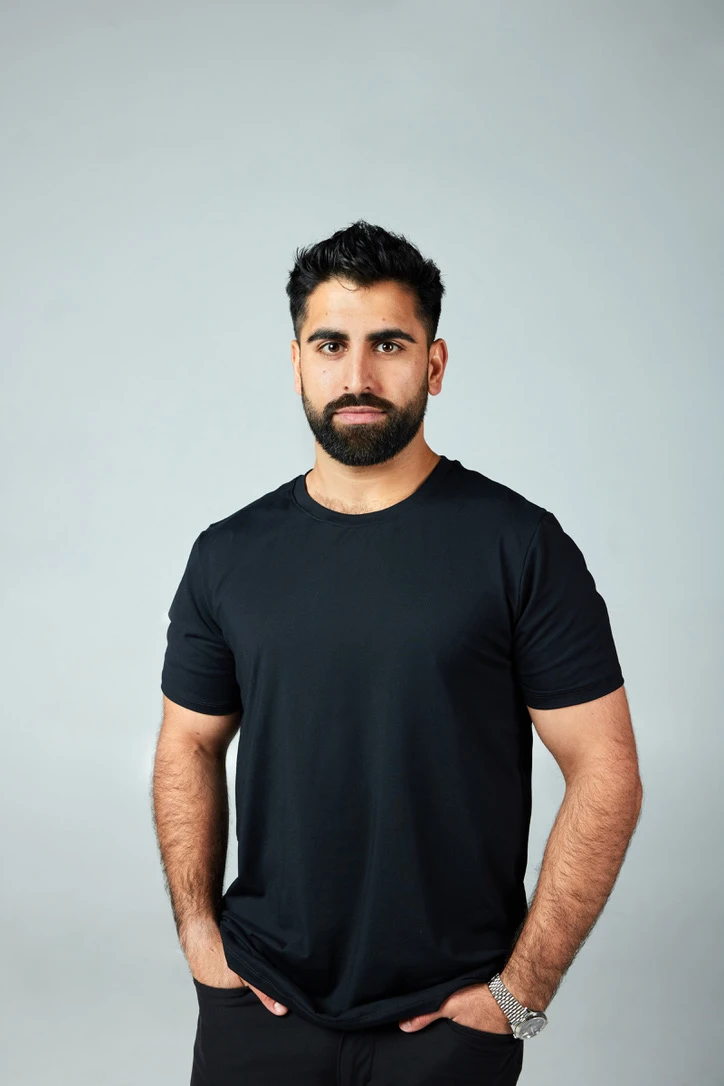
A part of getting to emcee the day meant that I got to also moderate some of the panels and talks on stage. The first one to kick off the morning, and get everyone packed in the room, was with Ben Yahalom, the President of True Classic. If you haven’t heard his Limited Supply episode (linked here), I highly recommend listening after reading this newsletter — it’ll personify a lot of what I talk about here.
Ben is one of the smartest people I’ve met in our space. He’s got that Israeli fire that some of the best operators I’ve met also share. He’s the type of guy you can’t beat… it won’t happen. Ben will always win. He’s ruthless; that’s why I love learning from him.
Before helping True Classic scale to $250M in sales (without raising a single dollar), Ben worked at Facebook as a partner with the Facebook Disrupters program. There, he saw how the fastest-growing DTC brands on earth were using Meta to grow their businesses at a staggering pace. When I was leading DTC at Hint, we started performing so well that we were asked to join the program, and it really was the cheat code to learn how everything worked. The Disruptor team could help anyone scale, provided they were invited in.
Every time I chat with Ben, I feel like I learn 19 new things that I could write a newsletter about, and this discussion was no different. Here are some of the key things that we talked about at Grow.
P.S. This newsletter gets a bit technical, so be prepared to strap in! I highly recommend listening to our episode after, and I will probably drop this full talk on Twitter this coming week.
The Most Important Metric in All of eCommerce
First, Ben strongly believes that traditional CAC and ROAS numbers don’t matter as much as we think. Instead, he believes the most important metric in all of eCommerce is: Net Contribution Margin or Net Contribution Profit.
See, Ben views business as a math problem and wants to know every single detail about the true cost and benefit of every dollar spent and earned. To calculate Net Contribution Profit, you need to consider every single expense on your P&L.
Not only does this include all of your standard COGs for manufacturing, shipping, packaging, etc. + all of your standard marketing costs for creative, ad-spend, team spend, and your 3rd party vendors, but that’s not all.
It also includes payment processing fees, any sale discounts you might be running, calculations on expected returns and exchanges, and all the other fun and sometimes “hidden” expenses for your brand.
The reason that Ben likes to do this is because it gives you a much, much more accurate picture of profitability for your brand. ROAS simply tells you how much revenue you generated in proportion to how much you spent on digital ads. Whereas, Net Contribution Profit tells you how much PROFIT you generated on a product-by-product basis (with every possible expense considered).
If you can understand these metrics and see where all of your costs are coming from, you can quickly identify initiatives that can move the needle on driving more profit for your business over time.
Focus on Understanding Marginal Opportunity and Incremental Contribution
To take it one step further, Ben believes the best marketers in the world are focused on an even deeper version of contribution profit which he calls “Marginal, Incremental, Contribution Profit.” He says “marginal” because he wants to understand how to gain efficiency on the last dollar you spend, not the average dollar.
I.e. if you were forced to look at all of your products, channels, and campaigns today, where could you get the most lift (i.e. contribution profit) with the last $10,000 or $50,000 of your budget right now?
This is the toughest part about marketing and business overall. Where do I allocate the last 5, 10, or 15% of my budget every month to drive the highest ROI across my products, channels, and campaigns? And by ROI, I mean generating profit, not just more revenue.
Ben says “Incremental” because he wants to know, “If I didn’t spend this money at all, what number of sales would I have driven anyway?” i.e. what’s my baseline that I’m trying to perform above? Is there truly a direct causal relationship between my spend on this product/channel/campaign and my baseline or not?
We were reminded to A/B test everything to confirm which channels are actually under/outperforming and which products/campaigns are truly driving the most profit for our brands.
CAC Should be Tied To Contribution Profit, Not AOV
Almost every marketer I know measures CAC based on AOV. Their biggest goal is to get the customer acquisition cost below the average order value of whatever they are selling. Ben says that they should be thinking about it differently. Instead of measuring CAC as a percentage of AOV, the ultimate goal should be to tie CAC with net contribution profit.
AOV minus CAC isn’t exactly the right metric to study to acquire customers sustainably. Instead, you want CAC to be equal to or below the net contribution profit per order to make sure you can achieve a sustainable (and profitable) spend for your brand.
How To Optimize & Improve Net Contribution Profit
To optimize and improve net contribution profit, you need to go line by line down your P&L in order to identify and analyze the biggest expenses that contribute to the cost of every sale. Here, you’ll find exactly where you can immediately impact your brand’s bottom line.
Number 1 is typically discounts. Every dollar or percent off an item you're selling eats into your contribution profit per order in a likely massive way. Instead of offering large discounts, A/B tests offer cash back in the form of in-store credit or a gift card for their next order. You’ll build that next purchase right in.
Number 2 is on the raw goods/products themselves. Want to make more money this year or next? Negotiate a 2-5% discount on bulk orders for your products. If you can reduce the raw cost by X% a unit, you can dramatically impact your brand’s profits overnight.
When you are a brand operating at Ben’s scale (think $100M+ of annual revenue), saving a few percent on the raw cost of goods can mean millions of dollars per year in additional profit for True Classic.
Number 3 is shipping costs. Who are your vendors, and should you be using someone else? How can you save 50 cents per order here? We know that shipping costs are based on weight + distance traveled. It’s unlikely that you can change the weight, but you might be able to change the distance traveled. For example, can you use 3PLs with warehouses closer to your largest consumer base, which will reduce the shipping cost for each order?
Number 4 is payment processors. Have you ever checked how much each payment processor charges and their take rate? Don’t just blindly enable them all on your store. Saving 0.1 % to 0.5% or the secondary 30 cents per transaction at scale by choosing a different payment processor can be an enormous profit driver for your brand. You don’t even need to switch, you can just ask for a lower rate as you grow.
Number 5 is payment terms. Want to increase your cash flows and destress your business? Ask to change your payment terms with your largest vendors from net 30 to net 45.
There’s no shortage of ways that you can optimize your business, and Ben has thought of them all. He’ll keep doing this exercise all the way down his P&L to keep adding more profit to his brand. Most of these tactics don’t require innovation, they just require negotiation and the right frameworks for how you run your business. They are all small changes that can have huge impacts on your brand.
Understanding Profit & LTV
Another important nuance here is that Ben likes to calculate these metrics in relation to the expected cohort-based LTV.
Why does this matter?
Well… let’s say that you have a DTC brand and one of your products is not profitable on a net contribution margin basis on the first order, but you know that X% of customers who buy lower-cost product A will also buy higher-cost product B within 90 days. Product A becomes a small loss leader to capture larger profit margins on product B, and when you combine the two purchases, you are net profitable on the pair.
With this in mind, you can confidently continue to spend on acquiring customers for product A, knowing that your blended contribution margin increases drastically after X% convert to product B after 90 days.
The reason why this matters is that an inexperienced growth marketer who doesn’t fully understand this equation might turn off the ads (or underspend and not capture the full opportunity) on product A before a healthy percentage converts to product B, making the total effort profitable 90 days after the initial sale.
If you don’t study these equations and the relationships between the various products in your portfolio, it’s hard for you to see the bigger picture and spend the right amount to capture the full opportunity over time.
Overall, I don’t typically focus on this complex math during my day-to-day but I know that my Chief Growth Officer, Ari Murray, does for our clients at Sharma Brands, especially as we begin going into Q4. If you are looking for a partner that can help you go deeper here, you should reach out! We’re looking to take on 2-3 more clients in Q3/Q4 to set them up with our unique playbook for scaling brands. Click here to contact us!
Okay, that’s it for today. In this newsletter, we got pretty into the weeds about the math behind profitable growth, but I strongly believe this kind of work is needed to achieve the best outcomes possible for your brand.
Every $50M+ brand I talk to is focused on this. They aren’t looking for 10x gains. They want to know how they can move the needle by 1, 2, 3, 4, or 5% per quarter to keep compounding their business. It’s a challenge, but I think Ben’s framework is the right one, and it’s worth studying.
If you want to hear him talk more about this stuff, I recommend you check out the 1-hour long conversation that Moiz and I had with him on this Limited Supply episode. He covers a lot of these topics and provides more information about everything he’s doing to grow the True Classic brand. It’s one of our most downloaded episodes, and I think you’ll love it.
Now, onto some fun stuff…
Vendor of the Week:
minisocial — the easiest way to get micro-influencer content, at scale, to include in your ads, website, and organic social.
Do you know why your favorite YouTubers and Instagram influencers have followers on their platforms? It’s because they understand HOW to create content that actually resonates with people on the other side of the screen. Meanwhile, have you ever wondered by your favorite beverage company has 100-300x more followers than actual likes on their post? It’s because they, for the life of them, don’t know how to create content that is contextually native to these social platforms.
This is why a platform like minisocial is so great for brands. They have a library of creators at your fingertips, ready to create content that feels native to modern-day media. I’ve worked with minisocial in the past, and found success repurposing their content for:
- Paid social ads
- Taboola/Outbrain ads
- Email/SMS flows + newsletters
- Website PDPs, especially for apparel
- Landing pages
I met Kirsten, their founder, over Zoom to learn about minisocial and couldn’t help but think, “How is everyone not using this yet?” The pricing is very affordable (they’re even giving 15% off their normal rate), they do all the work to wrangle creators for your brand, and their content consistently performs well on paid social.
If you’re looking to get more context in the mix, at an affordable price, I highly recommend booking a call with Kristen to learn more or visit minisocial’s website to build out a campaign.
LP of the Week:
Today’s LP of the Week comes from a brand that has been making waves since it launched, with Courtney Cox as the founder: Homecourt!
Before we even talk in-depth about the page, let’s just take a second to admire the headline, “From chore to relaxing ritual”. I mean, it makes me want to be chic like Courtney Cox and clean my counters.
The page does a beautiful job explaining the products in the bundle and showing off the fragrances that come with the products. Good photography can make or break a landing page.
If you’re tired of seeing a 1 or 2% conversion rate, and you’re ready to convert at 7% with a landing page, then book a call, and let’s strategize on what your landing page would include. We’ll talk through potential angles, styles of a landing page, and your sources of traffic. Our team will handle the research, strategy, copywriting, design, and development.
When we get on the phone, just mention you want the August 13th newsletter discount, and we’ll get you squared away. Use the button at the top of the HOOX website to book a call!
That's all for this week
I hope today’s newsletter was fun to read. Go listen to that Limited Supply episode if you haven’t yet, and everything will make 10x more sense, if it was confusing.
I hope you have an amazing upcoming week. Get your 9 hours of sleep in tonight, break a sweat this week, and I’ll see you next Sunday!