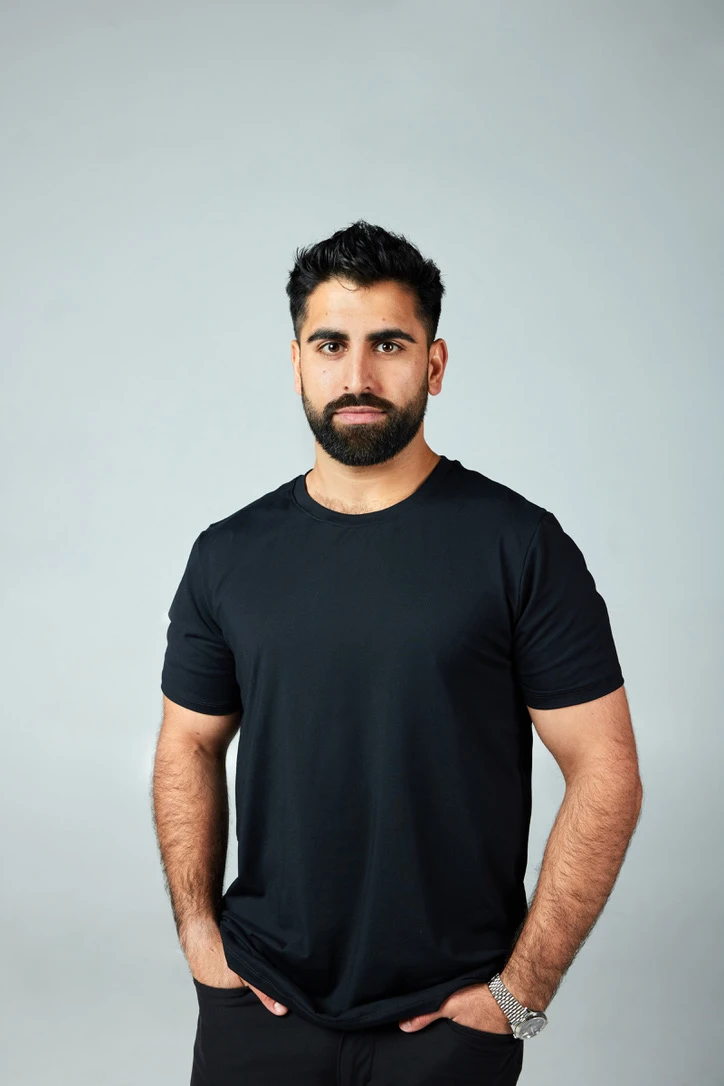
Happy Sunday!
If you’re reading this, I hope you’re relaxing with your feet up, your arms rested on an arm rest, and a beverage in your hand. Today, I’ve got some chilled water with lemon, my favorite drink to rehydrate.
Before we get into today’s newsletter, a couple of things to share with you:
- This past week’s Limited Supply episode is a great one to listen to after today’s email.
- Sharma Brands is hiring a Director of Retention. Apply here!
- Sharma Brands has one more spot for an open client through the end of the year. If you need ads, landing pages, website CRO or a new site, apply to work with us!
Today’s newsletter is probably going to eliminate most of the consulting hours I do through MentorPass because I’m going to go deep into what it takes to launch a brand. When you signed up for this newsletter, you likely got my brand launch 101 deck… this is going to be that deck on steroids (or Ketamine, whatever you’re into). It’s about an 11-page email, so buckle in; this is going to be a ride.
When you launch a brand, your goal should be to get to $5k per day in revenue… so that’s what this entire newsletter will focus on. This newsletter will not focus on product selection, hiring, day-to-day ops, and the struggles of being a CEO. I’ll save that for another email.
P.S. I have been working on this email for a while, and it’s finally ready to share, so please reply or tweet me if you enjoy it! Okay, let’s dive in…
When you’re launching a new brand, you need to have a few key pieces to create the “brand” versus just a product company.
A really good product or service
There’s simply no room for second-place products in 2023.
And what do I mean by a “really good product?” I mean that your product MUST solve a problem for the end customer. It must fill a need in their life that makes them want to tell their friends or buy more.
Here are some signs that you actually have a really good product.
- Customers organically re-order.
- Customers organically write positive reviews on your site or on social.
- Customers organically tell their friends.
- Customers organically post on social about how much they like your product etc.
Keyword: Organically. Paying for this stuff or only having friends and family members try your product and then give you “positive reviews” does NOT mean that you have a good product.
Especially in DTC, you need at least 100 net-new customers whom you’ve never interacted with to buy from you and organically tell you it’s good. Then you will know if you’re on the right track.
Strong messaging
The second most important thing that you need is really strong messaging. This is how you choose to communicate and, more importantly, differentiate how you position your product or service.
For example, how differently would you feel about Nike shoes if they messaged them as “Extremely cheap shoes made for $5/hour with basic materials” vs. “Premium athletic footwear for ultra high-performance athletes to excel at their sport.”
This is obviously a bit of a harsh comparison to prove a point, but as you can see, the messaging really matters!!
High-quality content
In 2023, nearly every business on earth would benefit from having more and better content. Marketing people call content, “creative” and it’s the driving force for every brand.
For content, as I’ve talked about before, you need a robust media mix of videos and static images, great copy, photography, and UGC. I don’t have time to get into every single format, but when you are thinking about launching your brand, here’s what I recommend.
Do 1 studio shoot and 1 outdoor/lifestyle photo shoot to get polished images and product in-use photos for your site, ads, and social.
Then, send your product to 10-20 creators and have them make some variation of these 6 videos:
- Unboxing and reviews
- Product in use
- A before and after usage comparison
- Authentically sharing the benefits and value props
- POV on how your product compares to competition/why it’s better
- Day in the life/lifestyle content
Focus on testing 10-15 different angles and hooks with these creators. This alone will be enough to allow you to get to $1-3K/day in revenue, through ads.
Organic social media
I don’t think this is required to make your first sale but as soon as you can, you need to start building some presence on organic social.
The first thing that consumers do when they think about buying your product (especially for a brand that they haven’t heard of before) is they search for it on TikTok, IG, and YouTube. If you have no presence, or a page with 250 followers, that’s not going to inspire a lot of confidence in the consumer! Pre-launch, and immediately post launch, I would invest some time and money into building these pages up as soon as you can.
The foundation of every successful business
Now that we have some of the macro down, let’s go a little deeper.
When I reflect on what makes companies successful, I realize that every great business has a combination of these 5 things. They need to strategize and execute on a combination of Product, Marketing, Operations, Customer Experience, and Finance.
Because I’m trying to provide as much value as I can, let’s discuss all 5 areas and what really matters when it comes to launching a brand.
On Product
IMO, the days of whitelabeling low-quality, and low-effort products from Alibaba and calling it a “DTC brand” are completely gone.
That was a trend in 2012-2019 but it doesn’t work anymore.
The brands that are truly winning in today’s DTC environment have real product innovation. Think about Hexclad, Ridge, Jolie, Eight Sleep, Lomi, etc. These companies are category creators and have become category leaders in their respective spaces. They all brought something NEW to the market and had real R&D efforts behind them.
So before you decide to commit to building a DTC brand, you should spend A LOT of time thinking about how you’ll differentiate on product. The quickest way to fail is to try to slap “better marketing” on the 60th or 600th competitor in any space.
On Marketing
Marketing is a very broad term but it essentially means the activities a brand takes to reach their end consumer. It’s the process of creating and sharing the story, value props, and key messaging with an audience in order for them to engage (i.e to buy something, learn more about your brand or product, or follow along).
For launch, you need to be focused on:
- Paid ads
- Organic social
- Emails & SMS
- PR, partnerships, and influencers
- Your shopify site/landing page
- Your basic tech stack
- Earned media & social proof
Here’s a few sentences on each:
For paid ads
Start with Meta. Meta is the best, most used, and most trusted social advertising platform of all time for a reason. Brands would not be spending hundreds of billions of dollars per year on Meta ads if they didn’t work.
Before you launch, create a Meta Business Manager account, create 25 pieces of creative, and run campaigns with your conversion event set to Purchase or Initiate Checkout and start spending $100/day.
After 3-4 days, you should begin to have some initial data about which ads are under vs outperforming. Turn off the low performers and focus on the top 5-7 highest performing variants.
Analyze all of the key metrics for your ads including their CPM, CTR, and CAC. Focus on the lowest CAC, highest RoAS ads even if they have higher CPMs.
- If this is low, it means Meta likes your content.
- If this is high, it means your content is not what Meta prefers on its platform.
- If this is high, it means your creative is engaging to the end user.
- If this is low, it means your creative isn’t doing a good job to get people interested.
- CAC: Customer acquisition cost
Because you are a brand that wants to make money, optimize for purchases or initiate checkout conversions, which is pretty low funnel.
Once you understand your rough CAC, start doing back of the napkin math regarding what it might take to get to $5K/day in sales. The better everything else works (email, organic social, brand awareness, etc), the more efficiently you’ll be able to scale.
Reverse engineer the spend and start scaling up from $100/day to $250/day to $500/day to $1000/day etc.
Organic Social
I covered this above but for launch, here’s what you need.
25-30 posts on each of your main channels. You could pick one channel to start if you have a small team. My preference is either TikTok or IG for that.
Beyond original content, I think you need to be prepared for community management.
As soon as you start running ads and selling products, you will start to get comments on your pages, ads, and organic social posts and you will start getting DMs and emails from people who saw your content or bought from your store. Your organic social efforts should be focused on responding to every single one of these comments, emails, and DMs in the early days. It’s probably the single greatest hack that I’ve found for companies to begin building trust with the users who actually care (aka engage) with your brand.
This is some of the highest value work that you can do at the launch stage.
Emails & SMS
For email and SMS, use Klaviyo or SendLand to start. You only need to have 3 main emails set up before launch. This includes a “thank you for purchasing email” with a receipt, a “Your order has been shipped” email, and a post delivery thank you email that includes a survey.
The good news for you is that nearly all email service providers have templates for these 3 emails and they can be created quickly.
Spend 1 day writing the copy and implementing these flows.
As you start to scale, dedicate more time to adding more complex flows such as:
- An abandoned site flow
- An abandoned checkout flow
- A back in stock email template
- A review request email
- A subscription reminder
- A product/category upsell
- A winback flow - After someone churns or doesn’t re-order in 90 days
PR, Partnerships and Influencers
IMO, a combination of PR, partnerships, and influencers are the second best lever to pull beyond paid ads at launch. Partnerships and influencers are particularly valuable for 3 reasons. They help generate more content, they build immediate trust, and they increase your reach without more paid ads.
Forming a great partnership or finding a relevant influencer is much easier said than done but here’s how I would go about it.
DM 50-100 influencers in your niche on Instagram, Twitter, or TikTok. I said Twitter because some large creators on IG have really small Twitter followings and it’s easier to reach them there where their DMs aren’t flooded. Ask if they would like to try your product or participate in an influencer campaign by sharing a few paid posts.
Collect their rates and enter them into a google spreadsheet.
Analyze their followers and engagement rate and review their fees. Use your best judgment to pick the top 5 influencers that you think have the best prices for their respective engagement rates or are the most “on brand” for your niche. I.e if you sell beauty products, you don’t want to work with a gaming influencer just because they have a bigger audience, better engagement, and lower rates. Be smart, choose wisely, send them products, and get some new posts that you can repurpose as ads and organic content on your channels as well.
For “PR” I would say skip the big publications to start and focus on finding internet bloggers and editors, draft a pitch, and email it to them.
Your pitch should make it as easy as possible for them to say yes.
Tee up the story, why they should run it, and make it personal to them.
i..e you could find bloggers who care about animal rights and pitch them sustainable fashion product that doesn’t use animal products for them to discuss. The idea is that the best pitches are personalized to the blogger or editor that you are trying to reach. Be thoughtful here. This extra effort can make a huge difference in getting placements vs not.
Your Shopify Site/Landing Page
As part of my broke man’s DTC playbook, I would tell you to simply use Shopify and select a basic theme when you are getting started with your brand. At the earliest days of any entrepreneurial journey, the only thing that matters is getting a single sale. You should conserve cash and use the tools available to you to launch your MVP. Just pick one of the available Shopify themes, customize it to fit your needs, and go from there.
Unbounce is another great alternative if you just need a landing page and not a full site. It’s the tool that we use to build hundreds of landing pages for our HOOX clients and I couldn’t recommend it enough. It’s the perfect way to test an offer or test new copywriting or visuals without building a full site.
Tech Stack
As far as your tech stack, keep it simple until you are running a profitable brand that’s making at least 1K+/day.
- Use Shopify for your site
- Use Klaviyo for email
- Use Meta business manager for ads
- Use Stripe for payments
- Use Highbeam for banking
- Use Slack for internal comms
- Use Gorgias for customer service
- Use Okendo for reviews
And that’s it. You can hit $5K/day in sales with this stack alone.
Outside of this stack I would recommend:
- Amped for email pop ups
- Nostra for site speed
- Black Crow for user identification on the site
- Malomo for order tracking
- Rebuy for subscriptions
Earned media & social proof
As you are launching, another thing to keep in mind is earned media and social proof. In 2023, there is nothing more powerful than good quotes and reviews if you want to build immediate trust and increase sales for your brand.
Think about your experience using Amazon recently. Do you ever check the reviews before you buy a product? How much does that influence your decision to buy? If you’re anything like me, it influences it A LOT. If I’m shopping on Amazon, or any DTC site, the first thing I do is check the reviews and FAQs. I like to read at least 5 reviews (if not more) before I decide to purchase or not.
If it’s a higher AOV item, the next thing I’ll do is go to YouTube or TikTok and search for your brand name + the word “review.” If there is nothing there, I’m a bit concerned.
IMO, reviews are still deeply underrated and you should be doing anything you possibly can to get them.
Send post purchase surveys, ask for reviews and offer a discount off their next order, tell customers that you are a small business and that their review could help change the trajectory of your brand. You need to be determined and persistent about getting this social proof as soon as possible in the early days.
On Operations
When it comes to ops, it’s really a mix of personnel ops and product ops which includes:
- Product manufacturing
- Packaging manufacturing
- Transportation
- Your 3PL and warehouse
- And shipping
I won’t cover people ops (i.e hiring, managing, org structures, etc) since that’s very unique to every company but here are some thoughts on the product ops side of the business.
Product Manufacturing
If you are convinced that you are going to continue with this business, you need to build a direct, personal relationship with your manufacturer.
After 6 months of sales, you should go visit them wherever they are.
I’m a big fan of US manufacturing but I understand that many brands manufacture overseas. Picking a good manufacturer is simply about research. People think it’s much harder than it is. Just google your product and the word “manufacturer.” Spend 3 days going through 100 links of research and find options for US manufacturers, overseas manufacturers etc and compare prices.
Order samples, test the quality, read reviews, and decide if it’s a good fit. Don’t waste more than 3 months on this process. Pick someone and go.
Here are some more important reminders for the manufacturing side:
- Always formulate or design your product with shipping costs in mind
- Every dollar you spend on shipping is a dollar less you can spend on customer acquisition, or that goes into your pocket at the end of the day.
- Design packaging with the retail shelf in mind. It’s a pain in the ass to re-do it when you go into meetings to pitch to buyers.
- Don’t choose a 3PL based on ads, just like an agency… choose a 3PL based on what people in your circle are saying.
Packaging Manufacturing
For packaging, I recommended simple, branded boxes. Nothing too complicated, and ideally, not just a plain brown box. You want to exude excitement when someone’s package arrives at their doorstep, and you want to be recognizable — that’s how you build brand.
Keep it simple to start and then expand into more custom boxes, inserts, etc as you scale.
Transportation
For transport, you need to find a trucking company you can rely on to get your products from location A to location B. They will need to know what to pickup, so you need to have this all organized. You need to make sure that whoever is giving your product to the truck driver, and whoever is receiving it thoroughly inspects it before getting in and out of the truck.
Your 3PL and warehouse
Choose a 3PL that isn’t venture backed and isn’t private equity owned when you’re just starting out. The 3PLs that are venture backed or PE owned are forced to raise prices by a TON to deliver returns. I’ve found that mom-and-pop 3PL shops will treat you better, have lower, more competitive prices, and take better care of you overall!
For smaller brands, I’d also recommend that you pick and pack the first 1000 orders yourself. You can save a lot of money and learn a ton by doing the hard work of picking and packing orders in your living room. This is an extremely common practice for a lot of new DTC brands.
IMO, you probably don’t need a 3PL until you are doing more than 50-100 orders/month.
Shipping
Don’t reinvent the wheel here. For shipping, use UPS or FedEx. It’s really that simple. No need to overcomplicate this in any way.
For Customer Experience
In the earliest days of launching a brand, the founder is often the chief marketer, web-designer, ads person, customer service team, and the person making organic social content. It’s A LOT but if there’s one area that might matter the most when you start generating sales, it’s customer service.
The reality of any business is that you will have issues, you will have delays, and you will have complaints. It’s normal! Don’t be discouraged by this, be determined to get better and fix it.
The absolute worst thing you can do as a new brand is not respond to customer support issues and tickets. They will happen so you need to be prepared.
Use Gorgias to collect and centralize tickets. Consider using an Oceans Assistant to help you deal with issues and communicate with customers.
Take all of the feedback that you get about the product and issues to heart. The easiest way to improve your business is by listening to real customer complaints.
Here are some other things that you should do:
- You should “Develop macros” meaning “common responses” to respond to the most commonly asked questions.
- Develop an FAQ that you can put up on the website, ideally PDPs, to tackle those questions before they stop someone from buying!
- If you’re the founder, spend time replying to everyone yourself to see what it's like and what customers have issues with.
- Setup post purchase surveys after an upsell to begin gathering data as soon as you can.
For Finance:
For the finance side, it’s all about spending responsibly to grow.
Also, let’s get this straight. Launching a brand is NOT cheap. Expect to spend $5K-100K without flinching before you know whether or not this might work.
Investory is expensive. Creative is expensive. Ads are expensive. Employees are expensive. Web design and development is expensive. Insurance is expensive. 3PLs are expensive. Shipping is expensive. DTC brands are not cheap but unlike many other business models, when they do start working, they can really scale. It’s painful in the beginning and requires capital and time, but if you can crack the code, there can be a lot of amazing upside ahead.
My Finance Stack
I use Highbeam for banking and credit, Capital One Spark for cashback, and I don’t raise money. My capital stack might be different than yours but this is what I use. Our bigger clients use Wayflyer to support their growth with 8-figure credit lines as well.
Due to the success of my other businesses, I have lines of credit available and I could raise equity capital if I wanted to but I choose not to. I’d rather have more freedom over my outcome and not be forced to pre-maturely scale.
I spend as much as I possibly can on credit cards to get cashback. This includes inventory orders, Meta ads, contractors, etc. As much as possible should go on credit cards as a simple best practice.
That’s the playbook so far
Okay, now you have the macro blueprint for launching a brand. I still think there is a lot more that I can add but I’m out of time for this week.
From here, you only need to focus on getting started, launching, and gradually scaling to $500/day, then 1K/day, then 2K/day, then $5K/day. Good brands can do this in 3 months.
When I see brands consistently doing $5K/day, then I know that they have found product market fit.
At that point, make your goal $10k. It should be more of the same, of what is working. Then to get to $20k/day, you’ll have to likely bring in a new product, new tactics, fresh creative thinking, new partners to help you scale, etc. At Sharma Brands, our sweetspot to work with clients is when they’re at the $25k to $250k per day mark.
Also, if you’re part of the 5K/day club, I’d love to hear from you in our Slack group. If you’re struggling to get to 5K/day, respond to this email and tell me what you’re primary blockers are.
I’m going to use the feedback to think about more topics that I can write about in my future emails ahead.
Alright, I hope you send this to your marketing team. It’s a long game, but there is nothing more fun than winning in DTC. Now onto some fun stuff…
Vendor of the Week:
Tatari — The easiest, and most effective way, to run TV ads with a budget as little as $10k and as large as $1M per week.
Tatari might be one of my favorite players in the CPG space… they make it so easy and efficient to run TV ads as a brand. Whether you have $10k/week to spend on media, or $1M/week to spend on ads, their ad setup, reporting, attribution and analytics are all dialed in. Tatari is also the only platform that lets you by connected, streaming and linear TV in one platform.
Their team put together an amazing Black Friday TV advertising playbook (there’s no email gate to view it), and it includes examples, analysis and tactics. As your brand gets to doing $20k per day in revenue, adding TV becomes an effective way to increase your brands awareness and get customers to know what your different products do.
Whether you are running TV ads today, or you plan to run TV ads in the future, check out the TV advertising guide by Tatari. You won’t be disappointed!
LP of the Week:
This week’s landing page of the week comes from a unique place — Google sends us some of their best advertisers, who they want to continue ramping spend with, and HOOX builds landing pages to support that goal. This advertiser is Our Place, famously known for their ceramic pan.
CLICK HERE TO SEE THE LANDING PAGE!
The brand is so well done, and our landing page perfectly encapsulates the brand along with a feature of my favorite celebrity, Selena Gomez. Without compromising their brand design or messaging, we were able to create a very direct-response landing page that will be run with paid media.
Most landing page companies that exist end up tarnishing the brand that you’ve worked so hard to build. With HOOX, I’m extremely careful to balance your brand design along with what it takes to win from a performance marketing standpoint. All our pages go through rigorous research, strategy and copywriting in order to make sure we hold that balance. I’d love to show you our best performing landing pages… just book a call on this link, and we’ll go through pages in your category.
That's all for this week
I hope today’s email was helpful to read and gave you some nuggets to think about or to help your business. Again, if you found it helpful, feel free to reply here or tweet me!
As you’re reading this today, I’m wrapping up my trip in Austin which started with MarketingLand and then F1. One thing I’ve learned… you can’t trust the insects in Austin! I wore shorts most days, and ended up with a crazy spider bite on my leg. Fully swollen and as I’m writing the email, my leg is elevated. Not a fun experience!
That said, I hope this upcoming week you have an amazing week. Get outside, get a workout in, stay hydrated, and get 9 hours of sleep. I’ll see you next week. I’m thinking of talking through how I hire… would that be valuable? We’ve never had anyone leave Sharma Brands, and I think it’s because we’ve got an amazing hiring practice.
See you next week!